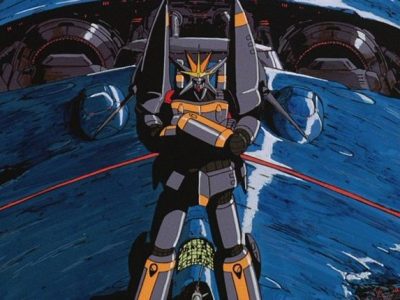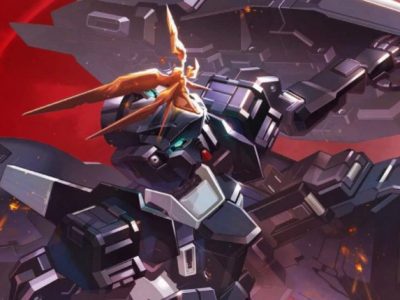

There comes a point in limiting yourself to a certain scale when a person realizes that they're being screwed. I realized this the day I saw a MG Prototype Gundam (amongst many other Gundam kits appearing in the 1/100 scale). It gnawed at my mind the reasoning behind not releasing a HG version of the kit. Even as I hacked and painted the normal Gundam, I wondered what was the differences that made them so great. I even went so far as to paint my own version of the Prototype because I didn't see the differences. Then I saw the B-Club conversion. Being curious to the appeal of B-Club (and the expensively priced parts), I opted to buy this kit and see the differences. Was I disappointed or amazed…?
Head
The standard Gundam head applies to both kits. There are no added resin bonuses to make the kit any different. The true difference appears in the painting… surprise (well, it will be for those who don't like to paint Bandai's Gundam kits), you have to paint this kit. Though molded in black, the resin pieces won't match at all with those bright white, blue, red, and yellows of the normal Gundam kit. Either way, the head is nicely detailed, and (depending on what source image you use for detailing references) the kit doesn't have that really odd long face that the animate version suffers from. It actually looks meaner in the plastic than on the television. Once painted and detailed, the head looks great.
Torso
The torso is the standard Gundam's, only now using a new backpack with greater detailing. Again, you have to paint the backpack (if you're going for accuracy, then it's light gray) and the torso to its proper colors. Of course, you don't have to do this. That's the beauty of models, customization is always open to the builder. Back to the point at hand…
The backpack is highly detailed versus the original HGUC version. The catch is you don't have the shield mounting slot in the back. You can get it, but you have to drill out the spot. B-Club left a depression there if you'd like to do it. I opted to not since I display mine with the shield. Both beam sabers sit perfectly in their new racks, even better after you drill out the three female plugs to connect it to the back of the torso. The instructions don't mention this (lots of writing in Japanese makes it hard to know if it is mentioned to drill, if you're suppose to trim the male ends to fit the small female ends, or if the kits are suppose to fit straight out of the mold) in the pictures. Normally, where you're suppose to drill is indicated with a drill shaped arrow with a number (I'm guessing the size of the drill bit in millimeters…don't quote me on that but it seems to work in my guessing on the drill sizes I did use…also, they weren't metric…where the hell do you find a metric set in the U.S. in local stores is beyond me…) and these pictures are not shown on the backpack, so I opted to drill them out. Fits like a glove.
Now for part two of B-Club kits, you have to glue everything in the resin. It's rare (in the few kits I've put together) that they will slide nicely together, so a bit of J. B. Weld will fit them snug together forever. I read up on the subject to learn normal model glues have little power against the almighty resin. Just a warning. After gluing your two new thrusters into place, drilling, and painting, you should have a beautifully assembled torso. Or you have a stroke from trying to figure out what just happened. Odds are you're already familiar to advanced kit building, so the stroke shouldn't be happening.
Arms
The arms feature more resin parts, exclusively to the lower half. After gluing your polycaps in their respective spaces and painting, you'll discover a little drill point aimed at the arms. This is indicating a panel to cover a slot in each arm for attaching a shield. You need to drill out the pieces anyway to insert the cover panel, but to use the Gundam's shield parts, you need to go a bit deeper. Also, the covers are pretty thin so you better decide to either keep the slot open for the shield (and on which arm you want to leave it open) or to cover them up. I wouldn't try playing with them by popping them on and off at a whim. If properly drilled, the shield sits nicely. Don't worry about leaving the pieces exposed, B-Club put some detail into the shield attachment point, so it won't just be a plain blank spot.
The added Prototype arms have a bit of a shape reminiscent of a Zaku-ish design, suggesting the evolution of this suit from its Zeon counterparts. It also keeps some of the shape that would later become the Gundam's and GM's design. Just an interesting note to think about if you're on the fence as to there being any real shape differences in the two Gundam designs.
I had a problem swinging the arms later on. After assembly, the elbow piece grabbed the rear side of the new arm, jamming it in either straight down or at a permanent bend. As I worked the arm a bit it seemed to go away but not completely. Also, the hands of the kit are the normal Gundam's, no upgraded hands here, as with some of the other B-Club kits I've looked at. It would have been nice to get an open or closed fist for the left arm or a tighter grip for the new beam rifle. I opted to steal an open hand from the GM's kit as I had an extra. The designs are perfectly compatible. Still, that beam rifle has a lot of play in it…
Otherwise, it's the standard Gundam's design for the arms, still gaining great flex from the added joints in the torso which is awesome if you decide to use the hyper bazooka or do some shield and gun poses.
Legs
The legs are the same as the Gundam's, except for the paint scheme and the new ankle guards. These guards have a medieval feel to them with their added detailing. They look just a bit smaller than the original Gundam's guards. Also, the guards are in one piece, so you have to flex them over the feet to slide them into the respective female ends. These parts feel very fragile but hold up to the action of assembly well. I wouldn't get to cocky when you put them on as you may break them, resulting in much swearing as you glue the parts back together. Luckily, the resin pieces tend to break very clean so repair should be simple. I noticed this during play time with the left over tree pieces during down time in between clear coats. They could bend, but not as far as their plastic brethren. Once on, the pieces flow perfectly.
The skirt armor above the legs is almost the same, but with a piece on the kit's right side replacing the normal squared armor. This piece appears to act as some type of storage device, but of what I haven't the foggiest. Its fit is a little loose but won't fall off easily either.
Weapons
and Accessories
Beam rifle- You have a new beam rifle that contains greater detailing. It looks the same size as the Gundam's, but doesn't fit as tight in the hands as the original does. It has a lot of play that can make posing a bit difficult. Not good to set a shot up of the Prototype aiming one direction and the rifle deciding to point a bit in the opposite direction.
Hyper bazooka- The hyper bazooka works really nice with this kit, but if you opt to have it ride on the storage rack, it still looks good. The shield doesn't bother it at all. It's up to you whether you'd like to have either.
Shield- Standard Gundam stock, good details and sits nicely (assuming you drilled correct). Only problem is getting it to sit in the hand. Just doesn't quite do it without some angle play with the polycap socket and the shield attachment to the arm. Not a big deal, but something to note.
Beam sabers- Fit decent enough plus they are transparent, which is always a bonus.
Core Fighter- Well detailed and comes with landing gear, so you can display it next to the Prototype if you'd like. I'd paint it in a scheme closer to the Prototype's colors as it doesn't really match to have a dark colored figure with a bright colored ship next to it. Whether or not this is okay according to the purist is beyond me. I just assemble the kits.
Conclusion
I'd have to say this is a great kit to get your feet wet with the B-Club side of Gundam model kits. It's cheap to build (relative to the price of their other conversion kits) and the instructions are pretty straight forward. Knowing how to read Japanese is a great thing here, but you'll survive without (I did). The resin had very few pinholes marking it, so not much time was spent filling. You have to remember to clean these parts as they will fight any paint you try to put on them until the mold grease is removed. Again, great time to learn these things with such an (relatively) inexpensive kit.
Some complaints are the lack of new hands to go with the upgrading of the HGUC kit with its B-Club parts. They would've added to the look but that's minor. Decals would have been great, if they were waterslide. Often HG kits get the shaft with waterslide decals. If you don't make your own, you're pretty much forced to invest in MG aftermarket decals Bandai produces. I ended up using the latest waterslides designed for the Stardust Memory HGUC kits. They work well and go with the kit nicely. Just would've been great to have a Prototype specific set to add to the overall atmosphere of the design.